

Rich Editorial Block Content
Introduction
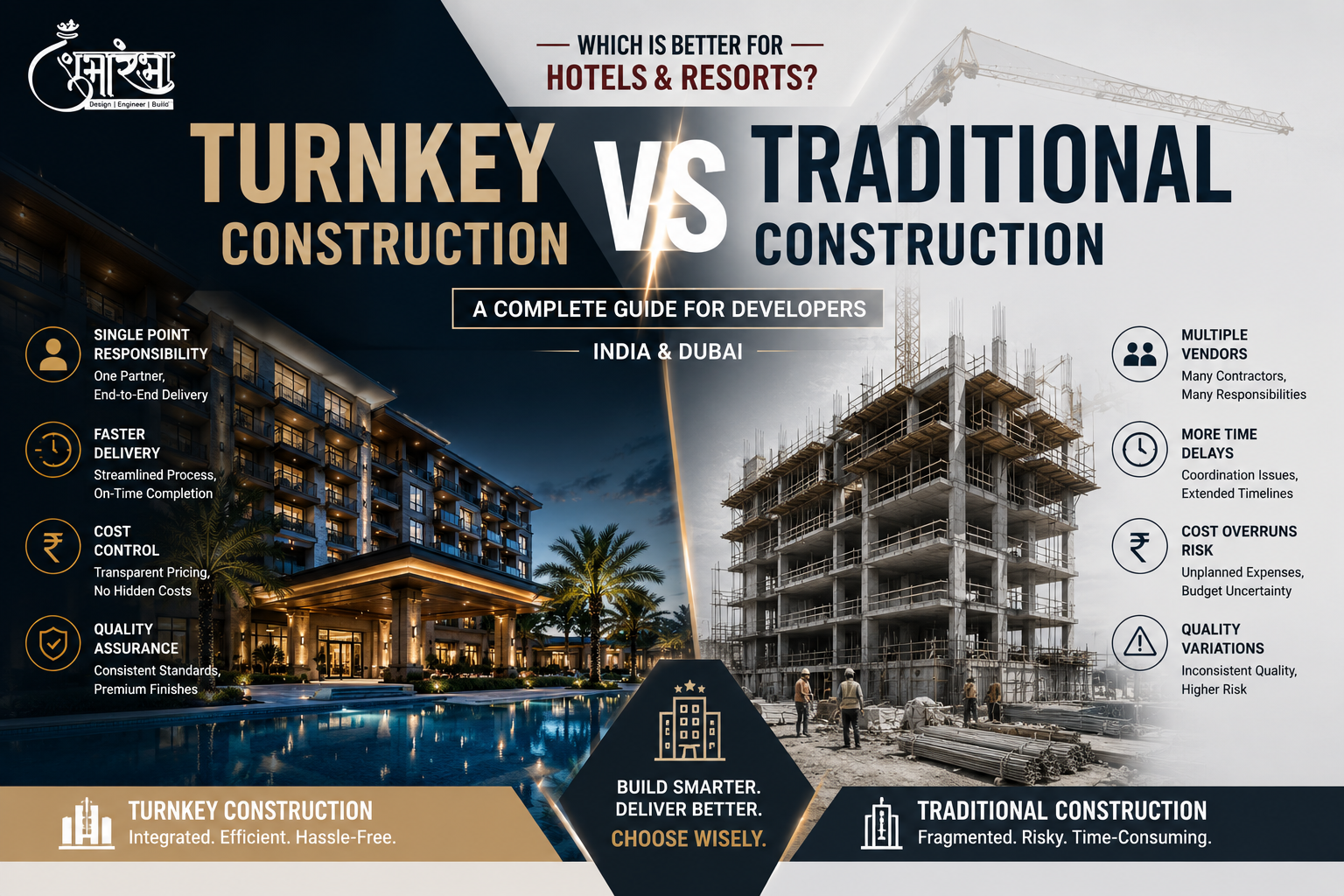
Choosing the right construction model is one of the most critical decisions in hospitality development. For hotel and resort projects, the choice between turnkey construction and traditional construction directly impacts project timelines, costs, quality, and operational efficiency.
This guide compares both approaches to help developers make informed decisions for projects in India and Dubai.
What is Turnkey Construction?
Turnkey construction is a model where a single company handles the entire project—from design and engineering to construction and final handover.
Key characteristics:
- Single point of responsibility
- Integrated design and execution
- Faster project delivery
- Reduced coordination complexity
In hospitality projects, turnkey ensures seamless alignment between architecture, interiors, and operations.
What is Traditional Construction?
Traditional construction involves hiring separate contractors for design, engineering, and construction.
Key characteristics:
- Multiple vendors involved
- Separate contracts and responsibilities
- Higher coordination requirements
- Greater risk of delays
This model is commonly used in general real estate projects but can be challenging for hospitality developments.
Key Differences Between Turnkey and Traditional Construction
1. Project Responsibility
Turnkey:
- One company manages everything
Traditional:
- Multiple contractors share responsibilities
Result:
Turnkey reduces confusion and accountability gaps.
2. Project Timeline
Turnkey:
- Faster completion due to streamlined workflow
Traditional:
- Delays due to coordination between teams
Result:
Turnkey is significantly faster for hotel projects.
3. Cost Control
Turnkey:
- Fixed or optimized cost structure
- Reduced risk of budget overruns
Traditional:
- Frequent cost escalations
- Change orders increase expenses
Result:
Turnkey offers better financial predictability.
4. Design Consistency
Turnkey:
- Unified design vision
Traditional:
- Design execution gaps
Result:
Turnkey ensures premium quality and consistency.
5. Quality Management
Turnkey:
- Centralized quality control
Traditional:
- Quality varies across vendors
Result:
Turnkey maintains higher standards.
6. Risk Management
Turnkey:
- Lower risk due to single accountability
Traditional:
- Higher risk due to fragmented execution
Why Turnkey Construction is Ideal for Hotels & Resorts
Hospitality projects require:
- Perfect coordination between design and operations
- Strict timelines for opening
- High-quality finishes and guest experience
Turnkey construction ensures:
- Faster project completion
- Consistent luxury standards
- Smooth operational handover
When Traditional Construction May Be Suitable
Traditional construction may work when:
- Project scale is small
- Developer has in-house expertise
- Flexibility in vendor selection is required
However, for luxury hospitality projects, this model often leads to inefficiencies.
Conclusion
For hotel and resort developments in India and Dubai, turnkey construction offers a clear advantage in speed, quality, cost control, and execution efficiency.
Developers aiming for premium hospitality standards and faster ROI increasingly prefer turnkey solutions over traditional construction models.